
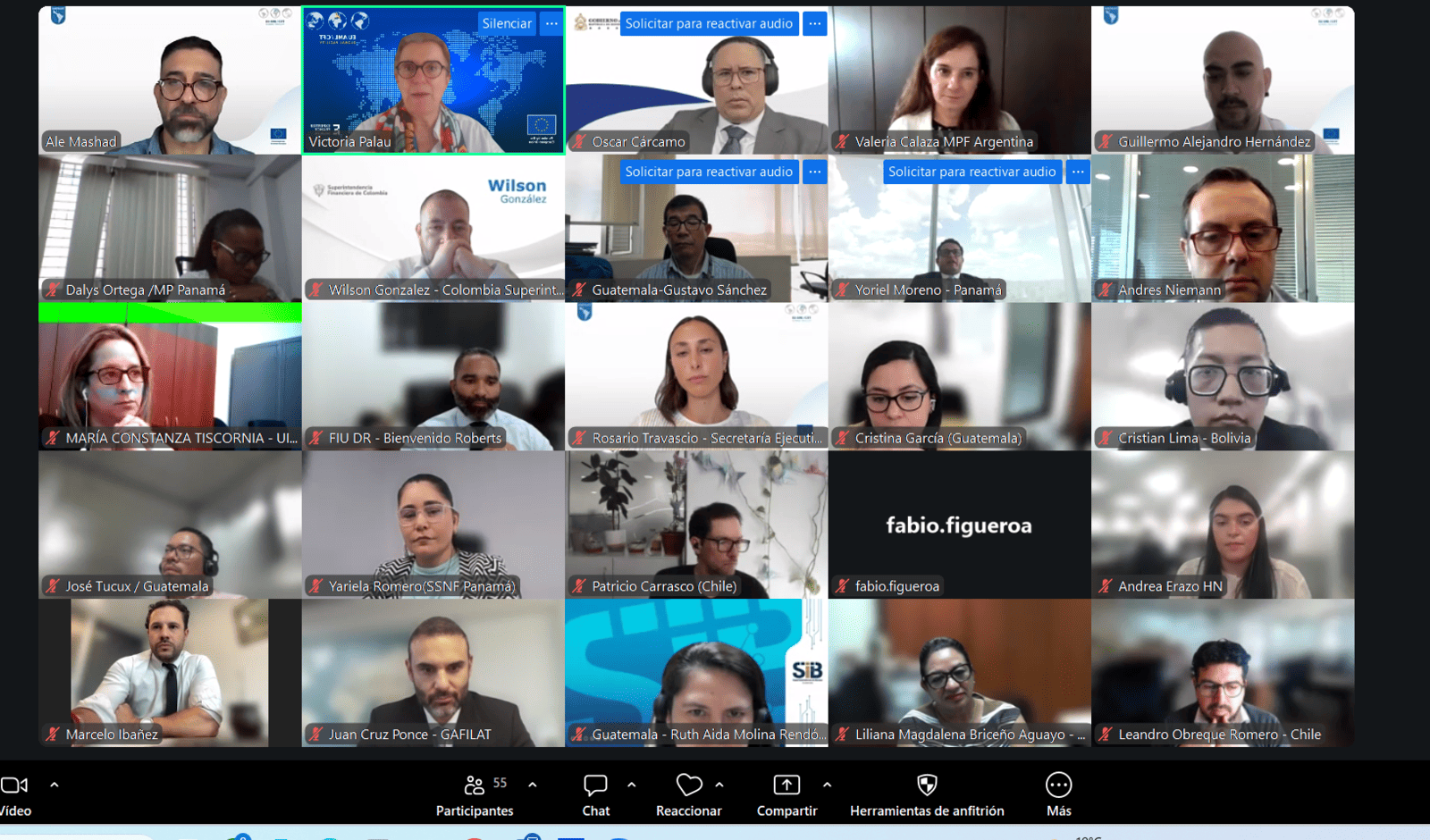
A training programme developed by the EU Global Facility on AML/CFT and GAFILAT is helping anti-money-laundering officials from 18 Latin American countries turn strong technical work into evidence that evaluators can actually follow.
Every few years, countries around the world go through an international check-up. Assessors review how well national systems prevent money laundering and the financing of terrorism, the practices used to hide illicit money or fund criminal and terrorist groups. These reviews, called mutual evaluations, look beyond laws on paper. They ask whether a country can prove, with evidence, that its system actually works. That proof has often been the hardest part, even for countries with strong institutions and solid results on the ground.
A Diagnosis Before a Solution
“Sometimes countries have very strong systems and good practices, but they don’t know how to demonstrate them,” explains Rosario Travasio, accountant at the GAFILAT Executive Secretariat.
To close that gap, the EU AML/CFT Global Facility and GAFILAT jointly built a training programme “The logic of effectiveness: Storytelling applied to mutual evaluations”, which teaches officials how to structure their evidence around four simple questions: what risk is being addressed, what action was taken, what data or cases prove it worked, and what impact resulted.
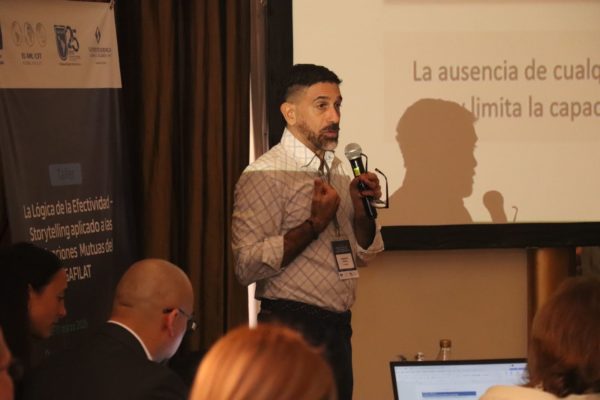
The programme did not start from an assumption about what countries needed. “This programme started by listening to countries and evaluators and finding the pattern that kept repeating,” recalls Alejandro Mashad, the EU Global Facility expert who designed the programme from scratch.
Interviews with country technical teams, evaluators and GAFILAT’s own Secretariat surfaced nine recurring errors in how information gets presented. Most often, activity reported where impact should be demonstrated.
The word “storytelling” is deliberate, but not in the sense practitioners might expect.
”“Storytelling has nothing to do with persuasion or making a nicer-sounding story. It’s a technology of how to organise information”
At the centre of the course sits the EDS (Effectiveness Demonstration Sequence) a four-step framework that walks a country from the risk it identified, through the action it took and the evidence that action worked, to the impact achieved.
“Four steps that can’t be reversed,” Mashad says, pointing to Aristotle’s observation that any story a human mind can follow needs a beginning, a middle and an end. “Miss one, and the evaluator is left guessing instead of validating.”
The conclusion, as Mashad puts it, is as simple as it is uncomfortable: “Countries aren’t undervalued for what they did. They are undervalued for how they explained it.”
From Lima to the Region: A Tool Countries Are Already Using
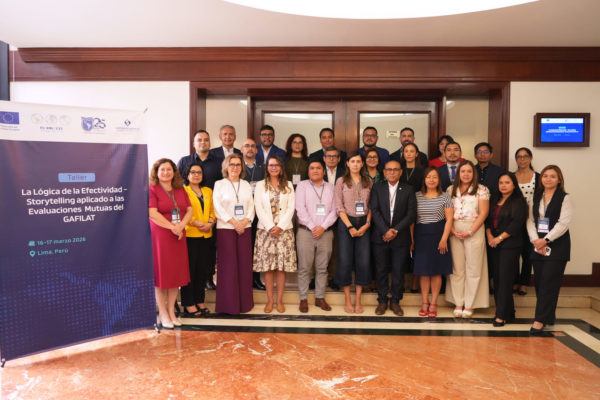
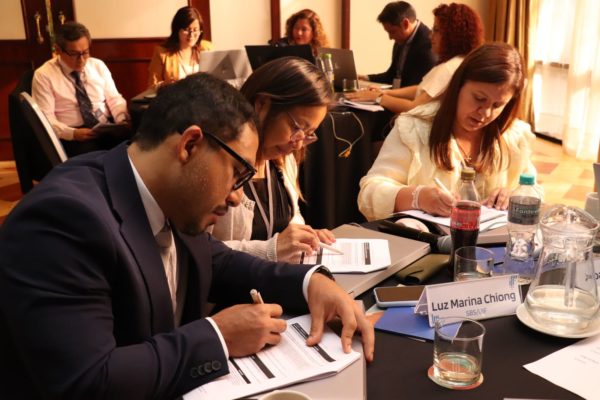
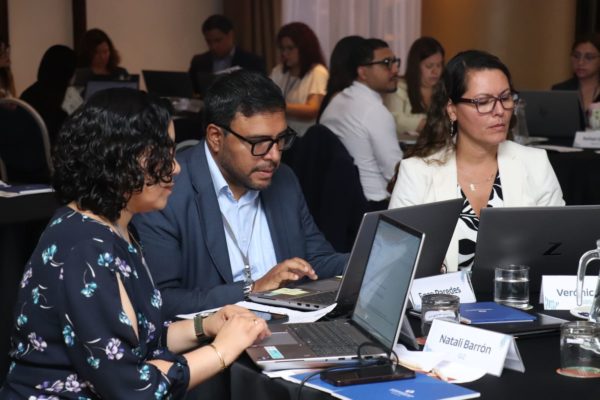
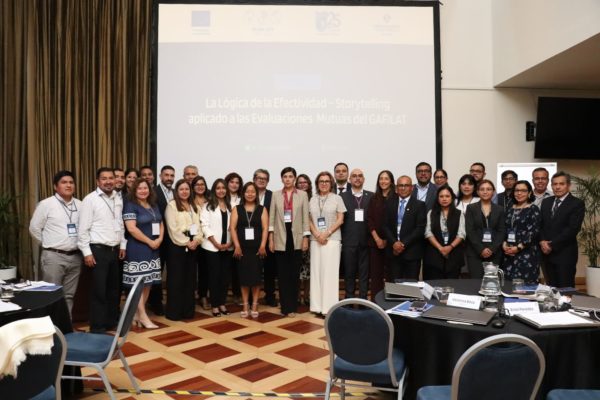
The methodology was tested first, not assumed to work: a one and a half-day pilot with 25 professionals in Lima in March 2026, followed by a regional webinar reaching around 100 participants across GAFILAT’s 16 member countries, and now an asynchronous course on the GAFILAT Campus e-learning platform for lasting, region-wide access.
Rosario Travasio describes the reception as exceptional, citing the fact that “the majority of the trainings is practical, based on real-life case studies” rather than theoretical.
Feedback after the pilot and the webinar showed it as one of the most highly rated courses of the semester: GAFILAT’s own figures put the webinar’s satisfaction score at 94.9%, the highest of any course the organisation ran in that period.
”The storytelling webinar was the highest rated of all GAFILAT activities delivered in the first half of 2026, with an average satisfaction score of 94.9 %.
Participants are already applying this methodology. “Being able to have that narrative – and especially a narrative that a third party who isn’t from the country can understand – that’s really been the core of the workshop,” says Bienvenido Roberts Carrero, Technical Director of the Financial Analysis Unit of the Dominican Republic, who is now working to extend the approach across his institution’s own training.
In Peru, where the pilot first took place, the Superintendency of Banking and Insurance has folded the same logic into everyday supervision. “Whenever the question comes up of whether we’re having an impact on this or that immediate outcome, the way we frame the question is through storytelling,” says Víctor Morales, Head of Innovation at the Superintendency. “If I’m doing A, impacting B, and achieving C.”
For Mashad, the point was never to make countries sound better than they are: only as clear as the work they have already done deserves. “Effectiveness isn’t a single act,” he says. “It’s a habit. And now eighteen countries of GAFILAT are starting to share the same way of demonstrating it.”





 This project is funded by the European Union.