

The terms virtual assets, cryptocurrency and digital trading are becoming more commonplace in everyday language around the world. Understanding what they are and how they might be capable of being used by organisations however, remains a distinct challenge. Why or how can NGOs around the world engage in this space?
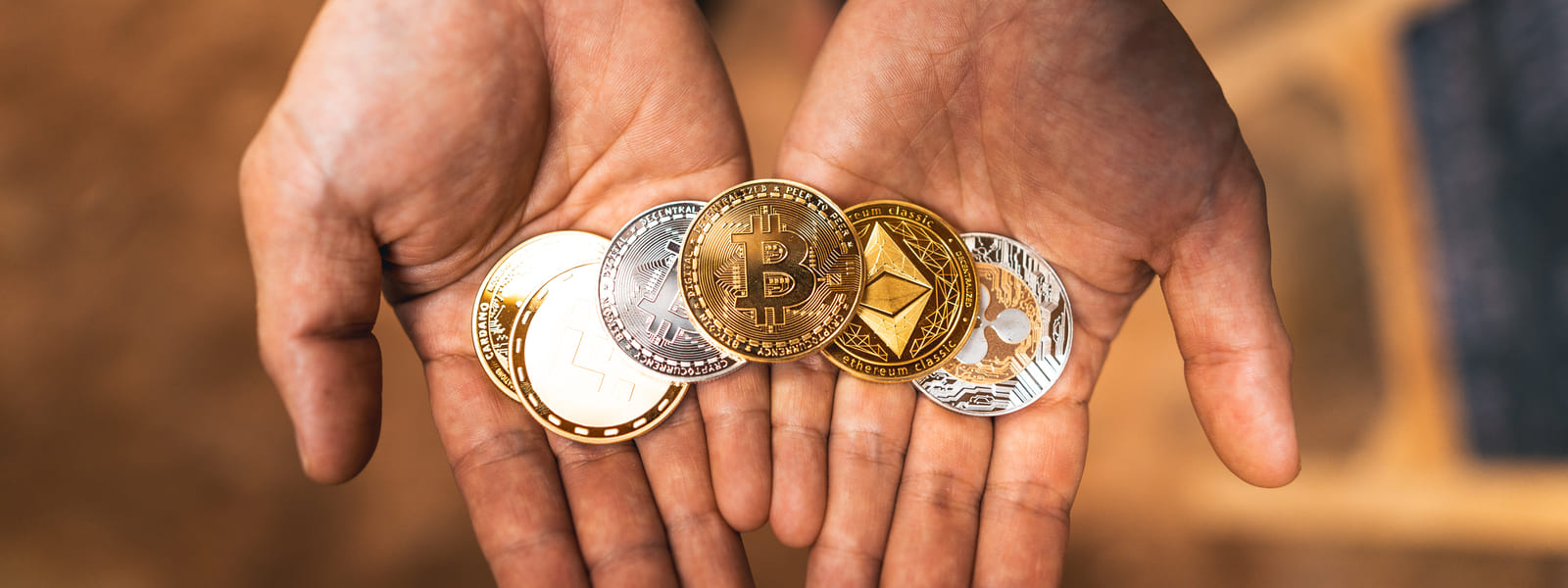
Virtual assets, also referred to as cryptoassets, refer to any digital representation of value that can be digitally traded, transferred or used for payment. The most common example of a virtual asset is virtual currency such as Bitcoin, Litecoin, Ethereum or Dogecoin. Gaming tokens, non-fungible tokens (NFTs) and governance tokens might also be considered virtual assets, depending on the circumstances and the context in which the assets exist and are used.
It is clear that the accessibility and acceptability of virtual assets as a legitimate form of trading is on a remarkable rise globally. The same is true when it comes to NGOs operating both domestically and internationally. Cryptocurrency is increasingly being adopted by NGOs to enhance fundraising, facilitate cross-border payments, and promote financial inclusion. Many charities now accept donations in virtual assets such as Bitcoin and Ethereum, opening up new avenues for supporters to contribute. Platforms like The Giving Block and BitGive have made it easier for hundreds of charities to receive crypto donations. According to The Giving Block, a platform specialising in crypto philanthropy, over $1 billion in cryptocurrency donations were processed globally in 2024, with 70% of Forbes’ US Top 100 Charities accepting cryptocurrency donations, a 25% increase compared to the previous year. This growth highlights the sector’s interest in virtual assets but also underscores the need for careful risk management.
So what are the apparent benefits?
Global Reach
Operationally, cryptocurrency offers cost and speed benefits, and this is augmented in the case of cross-border payments. With low-cost cross-border transfers, it is especially useful for NGOs operating in countries with unstable or limited banking infrastructure or high remittance fees. Cryptocurrency also allows organisations to send funds directly to field offices or beneficiaries without relying on traditional banks. NGOs often operate in such countries where banking systems are unstable or remittance fees are high and they can therefore send funds quickly and at a lower cost directly to field offices or beneficiaries, bypassing traditional financial institutions. This is particularly beneficial in emergency situations.
From a financial inclusion perspective, NGOs are using cryptocurrency to reach unbanked populations. In regions where people lack access to banking, digital wallets and crypto payments can provide a way to receive aid directly. For example, some humanitarian organisations have piloted blockchain-based cash transfers for refugees and disaster victims, ensuring that help reaches those who need it most without the barriers of conventional banking. Virtual assets can also reach unbanked populations; the World Bank estimates that 1.3 billion adults globally remain unbanked, a stark reminder of the iniquity built into the current financial system in terms of accessibility.
“Over $1 billion in cryptocurrency donations were processed globally in 2024”
Transparency and Accountability
Advocates of blockchain technology will remind us that the technology provides an immutable record of transactions, which can help NGOs demonstrate transparency in how funds are used. This is particularly valuable for building trust with donors and stakeholders.
Transparency and accountability are crucial for NGOs and charities, and blockchain technology appears to offer a solution, as every transaction can be traced and verified, helping organisations demonstrate to donors and stakeholders exactly how funds are being used.
Innovation
Blockchain itself has also facilitated innovation in the NGO sector. Some NGOs are experimenting with blockchain for supply chain tracking, digital identity verification, and smart contracts to automate aid distribution. The World Food Programme, for instance, currently uses blockchain technology to deliver $325 million to refugees in four countries; Bangladesh, Jordan, Lebanon and Ukraine, streamlining processes and reducing the risk of fraud.
Several well-known organisations have adopted cryptocurrency in their operations. Save the Children accepts crypto donations to support emergency responses, while UNICEF launched CryptoFund in 2019 to receive, hold, and disburse donations in cryptocurrency for open-source technology projects. Oxfam and other humanitarian agencies have also piloted blockchain-based cash transfers in disaster zones. Oxfam’s Unblocked Cash propgramme has significantly reduced delivery times by 96% and distribution costs by 75% using blockchain e-vouchers.
Despite these advantages, NGOs must contend with significant practical, legal and security challenges. Different jurisdictions will view the risks differently because the appetite for engaging with and understanding virtual assets is variable and changeable, so it is important to consider how these risks play out in different areas. That said, there are a number of common concerns, as set out below, which NGOs need to think about when considering the financial impact on their organisation and their short and long term needs.
Price Volatility
One key risk is the unstable value of cryptocurrency, as the prices are highly volatile. This is for a variety of reasons, from its decentralised nature to newness in the market and investor sentiment. For instance, Bitcoin’s value dropped by over 60% in 2022, and has witnessed over eight corrections over 50% in its 17 years of existence. However, Bitcoin has managed to recover from each correction over the course of a full cycle to make new all-time highs, including its most recent all-time high of US$126,000 per Bitcoin in October 2025. The inherently volatile nature means that it is difficult for trustees, particularly in countries which impose fiduciary or statutory obligations on them as custodians of money, to demonstrate that they are discharging those duties and that they have acted with reasonable skill and care where there is disproportionate reliance on either financing or investing in cryptocurrency, particularly without really understanding the risks or making sure there is proactive management of the relevant portfolio. There may also be rules around diversification and transparency of assets that may mean that these type of assets may be legally excluded.
Security
Security is another major concern, as cryptoassets are vulnerable to hacking and loss of private keys. According to Chainalysis, $2.2 billion was stolen in cryptoasset hacks in 2024.
Illicit actors are appearing in many forms to leverage cryptocurrency for crime, from transnational organised crime groups to traditional crime types, such as drug trafficking, gambling, intellectual property theft, money laundering, human and wildlife trafficking, and violent crime, and approximately $40.9 billion was received by illicit crypto addresses in 2024, a figure which has decreased each year since 2022.
Criminal activity includes the stealing of wallets of services and individuals, committing cybercrime like hacking, extortion, trafficking, or scams, as well as those facilitating this activity by selling the underlying infrastructure, tools, and services needed to commit crime and profit, including laundering-as-a-service. There are no clear statistics yet which suggests a clear trend of NGOs using cryptocurrency being specifically targeted or exploited, however multiple agencies across the world are beginning to monitor and explore the risks in this area, given the high levels of trust that often operate in the sector.
Regulatory Uncertainty
Tax implications are also significant. In the UK, HM Treasury published a draft statutory instrument in May 2025 to amend the Financial Services and Markets Act 2000 to include provisions relating to cryptocurrencies. The amends will designate certain cryptoassets as “specified investments” and some activities, such as issuing qualifying stablecoin, as “regulated activities”. In the UK, the Financial Conduct Authority (FCA) estimated that 7 million adults owned cryptoassets as of August 2024, representing about 12% of the adult population. While cryptocurrencies are not legal tender in the UK, they are regulated as cryptoassets, and activities such as exchange and custody are subject to FCA, and soon, revenue and tax, oversight. NGOs must also comply with anti-money laundering (AML) and counter-terrorist financing (CTF) regulations, which require robust due diligence and transaction monitoring.
Similarly, in the US, the Guiding and Establishing National Innovation for U.S. Stablecoins Act (GENIUS Act) was passed in 2025 and provides a framework for stablecoins. Two additional acts relating to cryptocurrency are being considered, which would change the jurisdiction over cryptoassets from Securities and Exchange Commission to the Commodity Futures Trading Commission.
The European Union has been storming ahead and now has a very comprehensive and enforceable regulatory framework for cryptoassets. The regulations, contained within the new Markets in Crypto-Assets Regulation (MiCA) amongst other laws, standardises crypto businesses registration, disclosure, risk management customer interaction across all 27 member states.
In contrast, cryptocurrency has been banned in China since 2021 and has very recently reinforced the restrictions. However, it is interesting to note that despite the ban, over $3.2 million was raised in cryptocurrency for the benefit of victims of the Hong Kong fire in November 2025. As a special administrative region, cryptocurrency donations are legal in Hong Kong. The use of cryptocurrency to fundraise in Hong Kong highlights the impactful and inevitable use of cryptocurrency that China may need to consider in its approach. It also highlights the risks of ensuring NGOs understand the varying legal and regulatory landscape in different countries, and so need to take care when considering the start and end point of transactions.
Limited Acceptance in Some Regions
Not all vendors or beneficiaries accept cryptocurrency, which may limit its practical utility in many areas. Therefore, the argument regarding financial inclusion may apply in some areas and yet be ironically disapplied in others. The exact scale of this exclusion vs inclusion has not been fully mapped out, however what is clear is that there is not yet a clear assumption that using cryptocurrency will always lead to financial inclusion.

Environmental Impact
The rapid rise of cryptocurrencies has in turn drawn attention to their effect on the planet. A key issue is the amount of energy required for Bitcoin mining. In 2025, Bitcoin mining used over 175 Terawatt hours of electricity annually worldwide. This amount is similar to what the 24th biggest energy-using country would use. A Bitcoin transaction creates as much pollution as 1.58 million Visa transactions. Sustainability and environmental impact is therefore under scrutiny, which may go against the very grain of some NGO activities, or undermine their overall mission in an indirect way.
Reputational Considerations
In tandem with the environmental impact is the significant impacts on both the reputation and values of particular NGOs whose very role it might be to preserve and maintain the environment and the planet,. This in turn may also negatively impact the view of beneficiaries and potential and actual donors.
There is also at times a core reputational risk, as cryptoassets are sometimes associated with illicit activity; Chainalysis found that illicit transactions accounted for just 0.14% of all crypto transaction volume in 2024, but public perception remains a challenge.
Reputational risks also arise in a different way, as cryptocurrency is often associated with politicised elements, and so raise the risk for NGOs in using it. Cryptoassets have, at times, been linked to political figures, parties, or movements, which can create challenges for NGOs that are committed to neutrality or have a diverse supporter base. If an NGO is perceived as endorsing or benefiting from politically charged crypto activity, this may undermine its independence and alienate donors or beneficiaries who hold differing views. Maintaining clear boundaries and transparency around the source of cryptocurrency donations is essential to avoid unintended associations and to safeguard the organisation’s reputation.
“There is also at times a core reputational risk, as cryptoassets are sometimes associated with illicit activity”
Addressing the Risks
Given the landscape regarding the possible abuse of cryptocurrency is still evolving, it is important for NGOs to think proactively and regularly about how they can adequately engage in using it for its overall advantage.
Similar to general financial management, NGOs should think about how they can best prevent, identify, and manage any associated risks and have proactive mitigation in place that can be acted on promptly should the need arise. This will translate into well drafted and understood operational policies, process and review mechanisms across the organisation.
NGOs should establish a written policy covering the acceptance and use of cryptocurrency, how they will undertake risk assessment and mitigation strategies, how they will comply with legal and regulatory requirements, and set out clear and firm operational procedures for converting crypto to fiat currency, with relevant accountability mechanisms.
Undertaking some form of due diligence will also be important. Before accepting cryptoasset donations or engaging with service providers, NGOs should verify the source of funds to prevent money laundering, assess the reputation and reliability of exchanges and wallets and ensure compliance with financial, tax, charity and other legal requirements if applicable.
Having strong security measures is also critical so that the organisation is not unduly exploited for financial abuse or other purposes. Key steps include using reputable custodial services or secure wallets and doing relevant research accordingly, employing multi-factor authentication and access controls, and ensuring there is capacity and capability to regularly update software and to monitor for any suspicious activity.

Further, many jurisdictions now require organisations which use cryptocurrency to keep a detailed record of all relevant transactions. Therefore, ensuring clear and comprehensive records are in place will be important. Trustees should also regularly monitor the value of holdings and consider converting to fiat where appropriate.
Finally, a cautious culture is likely to be beneficial at this time. Trustees need to consider how dynamic and agile reporting lines in relation to cryptocurrency work in their organisations, as well as being clear about whether or not there needs to be any reporting to relevant regulators. Training will also be important; staff and trustees should understand the basics of cryptocurrency and blockchain, their relevant legal and regulatory obligations in whichever countries they operate, and should understand the ever changing environment for best practice in security. If in doubt professional IT, accounting or legal advice should be obtained with relevant expertise.
Summary
In summary, while cryptocurrency offers NGOs new opportunities for fundraising and financial inclusion, it also introduces legal, operational and practical risks. If an NGO is considering implementing the use of virtual assets, the following key action points should be kept in mind.
- Create a virtual assets policy setting clear rules for accepting and managing cryptocurrency.
- Ensure compliance frameworks meet AML, CTF, and tax requirements and keep accurate records.
- Manage risks by monitoring volatility, using secure wallets, and protect against cyber threats.
- Protect reputation by considering the environmental, ethical, and political impacts of using virtual assets and communicate any use transparently.
- Train and educate staff and trustees and seek advice from experts when needed.




 This project is funded by the European Union.